Rock Creek Group (UT)
- Right now
- OpenInside the published season, our reading
- Sites
- 1All of them booked ahead
- Season
- May 1Opens May 1. No closing date published.
The place
the agency’s own description · what’s there · 3 notices
In the agency’s own words
Rock Creek Group Campground is located next to Rock Creek in the Rock Creek Drainage at an elevation of 7200 feet. The drainage sits on the southern slope of the beautiful Uinta Mountains. Visitors enjoy fishing and exploring the popular Rock Creek Trail. Keep reading
Recreation
Rock Creek offers fishing for brown, brook and rainbow trout. Whitewater rafting and kayaking opportunities are available seasonally.
Facilities
The campground is a group camping area that can accommodate up to 75 people. Picnic tables, campfire rings and grills are provided, as are vault toilets. The campground has no running water so campers must bring their own supply.
Natural Features
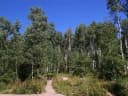
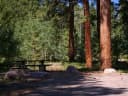
This shaded campground is set back off the main road for privacy. Dense stands of aspen and pine trees shade the campground, and sagebrush and wildflowers dot the landscape. Evenings in this area are cool.
Nearby Attractions
The Rock Creek Trail begins just over a mile away and connects with an accessible, paved interpretive nature trail in Yellowpine Campground. The Rock Creek Trail provides access to the High Uintas Wilderness, where hiking, backpacking, horseback riding and backcountry fishing are very popular activities. Upper Stillwater Reservoir and Lower Stillwater Ponds are nearby, offering fishing for brown and rainbow trout, swimming and picnicking. Upper Stillwater is currently accessible only by hiking in. Numerous hiking trails lead into the High Uinta Wilderness Area from here.
What the agency tells you
No drinking water is available at this campground; please bring your own supply
Click here for more information on the Ashley National Forest
Don't Move Firewood: Help prevent the spread of tree-killing pests in our national forests by obtaining firewood near your destination and burning it on-site. For more information visit dontmovefirewood.org.
Tents and rigs
- Sites
- 1 · 1 group
- Hookups
- None
- Longest rig
- 30 ft
- Paved pads
- All
- Accessible sites
- None listed
- Campfires
- Allowed, barring fire bans
- Shade
- Every site
Facilities
- Toilets
- Vault Toilets
- “…rings and grills are provided, as are vault toilets. The campground has no running water so campers…”
- Drinking water
- None, bring your own
- “…as are vault toilets. The campground has no running water so campers must bring their own supply. Natural…”
Around the campground
- On the water
- Reservoir, Creek
- Biking
- Fishing
- Hiking
- Wildlife viewing
- Night sky · 307th darkest of 458 in UT
- Bortle 3
- Fall color · reported 13 days ago, 24 km away
- Peak color
No reading yet, book on recreation.gov
Every site here is reservable, and the record lists none held back for anyone who drives up.
No availability snapshot inside the last 36 hours, so this page draws nothing rather than ageing a reading into fiction.
Watch for a cancellation
Full? Watch it.
One email when a night opens, plus More Than Just Parks dispatches. Unsubscribe any time.
We read recreation.gov once an hour, at 40 minutes past, and write the first time a site in your window is free for the nights you asked for.
Scanners that check every few minutes exist, and most of them charge. This one is free, it reads the same calendar, and it won’t always be first.
Tell me when the season opens
Watch for the season to open
One email when the season goes on sale, plus More Than Just Parks dispatches. Unsubscribe any time.
We check once an hour, at 40 minutes past, and write the first time the agency has that season on sale.
Scanners that check every few minutes exist, and most of them charge. This one is free, it reads the same calendar, and it won’t always be first.
We make nothing when you book. The link goes straight to the government.
Every line of the receipt · 12
What you actually pay
Who keeps the booking fee
The agency’s own policy text says the reservation fee and the cancellation processing fee are “retained by the reservation service contractor”, and that a campground concessionaire will decline to refund them because “they did not receive these fees”. Recreation.gov is run under contract by Booz Allen Hamilton. What share of your booking fee the contractor keeps isn’t published in any federal dataset we can read, so we print no number for it. Our reporting on the contract →
How we know this receipt · 5
rules read Sep 9, 2026 · rates Sep 10, 2026 · How we know all this
The sites
1 sites · the site map
All 1 sites
Toilet distances are OpenStreetMap’s, measured for 1 of the 1 sites listed. A site with no reading is unknown, never far.
The price is derived by CAMPANAC, not published per site: the per-night rate this campground publishes for each site’s own site type. 1 of the 1 sites listed carry one, and a site whose type has no published rate sits out of the price rather than being called free.
| ROCK CREEK GROUP | G01 | group standard nonelectric | 30 ft | 203 ft | 3,171 ft | $50 |
Getting there
the map and the coordinate · the agency’s directions · the phone number
Where it is
 Miners GulchAshley National Forest · 0.6 mi
 YellowpineAshley National Forest · 1.4 miRock Spring Camping AreaAshley National Forest · 4.7 mi
 Upper StillwaterAshley National Forest · 5.1 mi
 Moon Lake CampgroundAshley National Forest · 5.5 mi
 Moon Lake Guard StationAshley National Forest · 5.9 mi
From Duchesne, Utah, take Highway 87 north 15 miles to the Mountain Home turnoff and turn left. Continue 2.5 miles north to the Rock Creek Store and turn left toward Rock Creek Canyon. Proceed approximately 14 miles to the campground.
The weather
the next four days · the thirty-year normal
Next four days, and the thirty-year normal
Forecast
NWS forecast for Tabiona, UT
Typical weather
Typical May night 36°F, day 65°F.
Coldest night of the open season: typical May night 36°F. Bring the bag rated for it.
Daily high and lowDays with 0.10 in or moreOutside the published season
A normal is the 1991-2020 average for the month, not a forecast: about half of all Julys are colder than the July line. The seven-day forecast above answers the other question.
The land, and who answers for it
what threatens it · who answers for it
Roadless country, and what’s coming for it
You’re camping on ground somebody wants. We track the threats and the comment deadlines.
Who answers for this land

Rock Creek Group (UT) is in Utah’s 3rd congressional district. Its representative, Mike Kennedy (R), votes on the laws that decide what happens to this land. Public-lands grade so far: F. See every public-lands vote →